Last month, I had a very public moment of frustration. It wasn't the crying kind, but the sort where you tilt your head and tense your shoulders—you know, when you're struggling with your own eyesight just to read a simple text message.
I was sitting in my favorite café, trying to reply to an urgent work email. My expensive, custom-made glasses, which had set me back nearly five hundred dollars, made my phone screen look like a funhouse mirror. I kept nodding my head up and down, searching for that one tiny spot on the lens where the words actually came into focus.
A kind woman at the next table leaned over with a gentle smile. She whispered, "Are you all right? You look like you're wrestling with a small bird."
I sighed and set my phone down. "I'm wrestling with my glasses," I confessed. "I spent a fortune trying to find the best reading glasses for women, but all I got was blurry frustration."
For months, buying new glasses felt like entering a high-stakes competition. It was incredibly stressful. My eyesight is changing, and I needed progressive lenses—ones that could handle reading up close, seeing my computer screen, and recognizing a friend across the street, all in a single pair. This is where everything went wrong.
I tried the highly recommended, well-known optical shops. I spent hours choosing frames, then paid hundreds of dollars. But the lenses? They were a disaster. They came back incorrect—not just a little off, but fundamentally flawed. Blurry, useless, and giving me headaches.
I remember one conversation with a customer service agent after receiving my third blurry pair. They kept offering me "store credit"—an extra 10% bonus if I just tried again. But here's the catch: if you accept that credit and the next pair is also blurry, you lose your money for good. They trap you in an endless cycle of returning unusable glasses.
I was done losing $200 to blurry vision. I was finished with high-pressure salespeople who cared more about closing a sale than correcting my sight. I needed simplicity. I needed something that worked without the huge hassle and price tag.
Verdict: If complex prescription lenses keep causing blurriness, take a step back. Start with simple magnification first.
I realized I needed to simplify. For my everyday tasks, I didn't actually need progressive lenses. I just needed reliable magnification for my computer and books. I began searching for simple, high-quality readers that were also comfortable and didn't look like they belonged on a history professor.
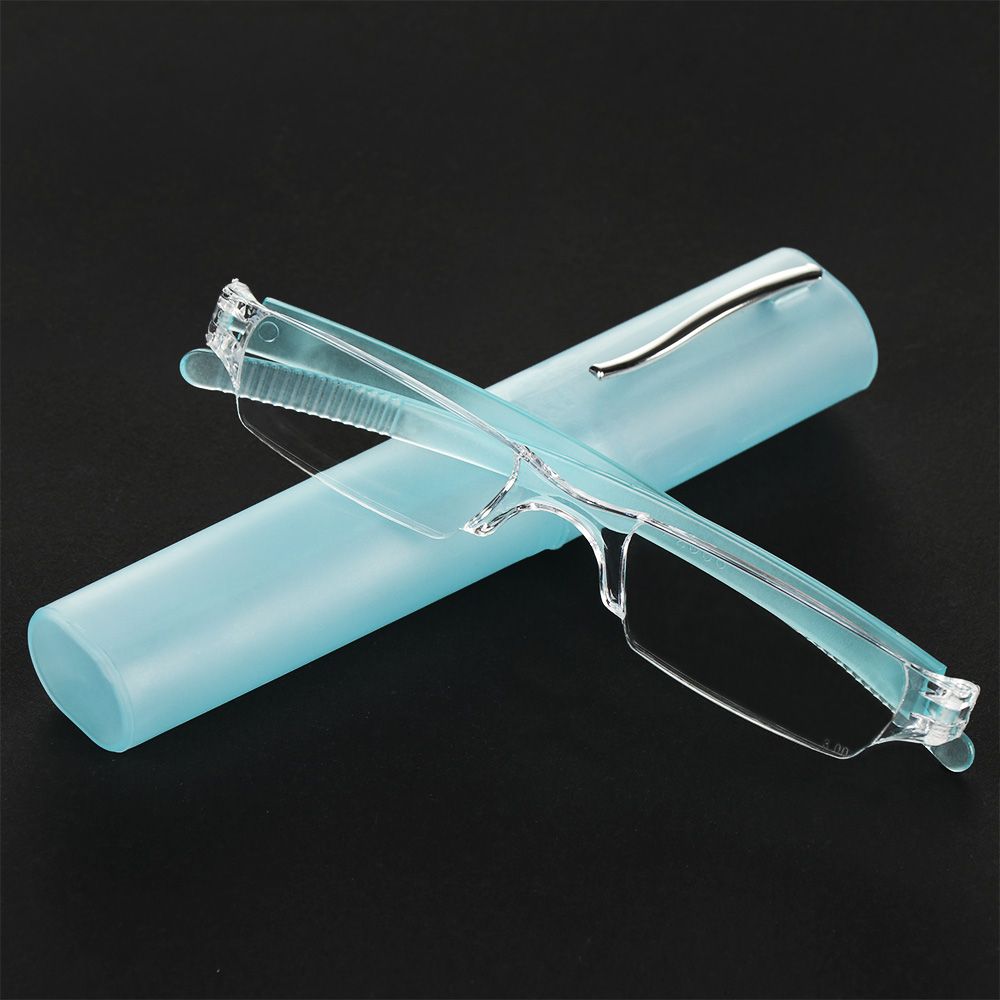
I found my answer when I came across the elegant, minimalist design of Ultra Light Reading Glasses. They promised simplicity, durability, and blue light filtering—a major bonus for my long hours in front of a screen.
I looked into the product details and discovered the sleek design and excellent value on the Official Mozaer website. The price was so low compared to my past experiences that it almost seemed like a mistake. Could something this affordable really be better than the hundreds of dollars I'd wasted?
I decided to take a chance on the Ultra Light Reading Glasses With Case. I ordered the +1.00 strength I needed for computer work.
When the glasses arrived, the first thing I noticed was their weight—or rather, the lack of it. They were truly ultra light. My old frames felt like bricks in comparison. The pressure behind my ears, which used to build up by midday, completely disappeared.
The lenses were clear from edge to edge. There was no tiny sweet spot I had to crane my neck to find. I could look at my entire laptop screen without moving my head like an owl.